
Getting an App or Software Built: How We Do It, and Why It Stopped Costing Six Figures
You have an app in your head, or half of one on somebody's laptop. Here is how it gets finished, what it takes, and what we'll tell you that an agency won't.
26 articles
You have an app in your head, or half of one on somebody's laptop. Here is how it gets finished, what it takes, and what we'll tell you that an agency won't.

Writing the book is step one. There are nine more, and they're where most books stop. Here is every one of them, and what it means to have them done for you.

A film used to need a crew, a budget and somebody's permission. It now needs a story, and people who know how to make it. Here is the whole process, including the launch.

Most sales teams lose the deal before anyone picks up the phone. This is the system we built so that doesn't happen to us, and how it would run for your team.

Four hundred people applied. You need one. Reading every resume is the slowest and least reliable way to find them, so we built a different way.

You know something people would pay to learn. TeachClub is our software for turning it into an online school: the AI drafts it, teaches it and takes the payments, and we set it up with you.

SuperCool is the AI platform our company built and owns. It's the reason one DoubleUp specialist can do what used to take a department.

The jobs people actually bring them — and none of them are what the word “engineer” makes you picture.

Every asset your business needs — video, ads, photos, copy — and the reason one person can now make all of it.

The full list — paid, organic, email, funnels, content — and the one job underneath all of it.

The calls, the bookings, the follow-ups, the systems — the work that keeps a business running, finally owned by someone.
You don't need a developer, and you don't need another subscription. You need one specific thing to work — and there's a role for exactly that.

A film needed a writer, an editor, a composer and a producer. The only thing stopping one person from being all of them was hours, and hours got cheap.

Somebody has to run the machine while everyone else does their job. That used to be a department.

A proposal is sitting in your inbox and there's one question underneath all the others. It's in here — and so is the honest answer.

Your forty logins are about to become one. The only thing that will still be scarce is a person who knows what to ask it.

Every call, every booking, every follow-up, every system — the work that keeps a business running used to be a department. Now it's one person.

The first AI tools are instruments you play one at a time. The next ones hand work to each other. That's where the interesting failures live.

For twenty years we sold people tools and called it progress. A tool is a job you haven't done yet — a different thing from a solution.

Every serious company has access to the same handful of AI models, and they all improve on roughly the same schedule. So everything you wrap around the model is the advantage, once the model itself is a given.

A film needs a writer, an editor, a composer, a colourist and a producer. A book needs an author, an editor, a cover designer and a typesetter. What stopped one person from being all of them was hours rather than talent — and the hours just got much cheaper.

The clearest version of your idea only ever exists in your head. Everything after that is translation, and every translation loses something. Before you brief anyone, ask one question — and answer it honestly.

There's a role most people have never heard of: the person who sits with the customer and builds the thing, which is neither an engineering job nor a sales job. It's the one the biggest technology companies guard most closely.

An agency is a bundle — five specialists behind one account manager. That structure made perfect sense when you couldn't hire five people part-time. The constraint is gone. The structure isn't.
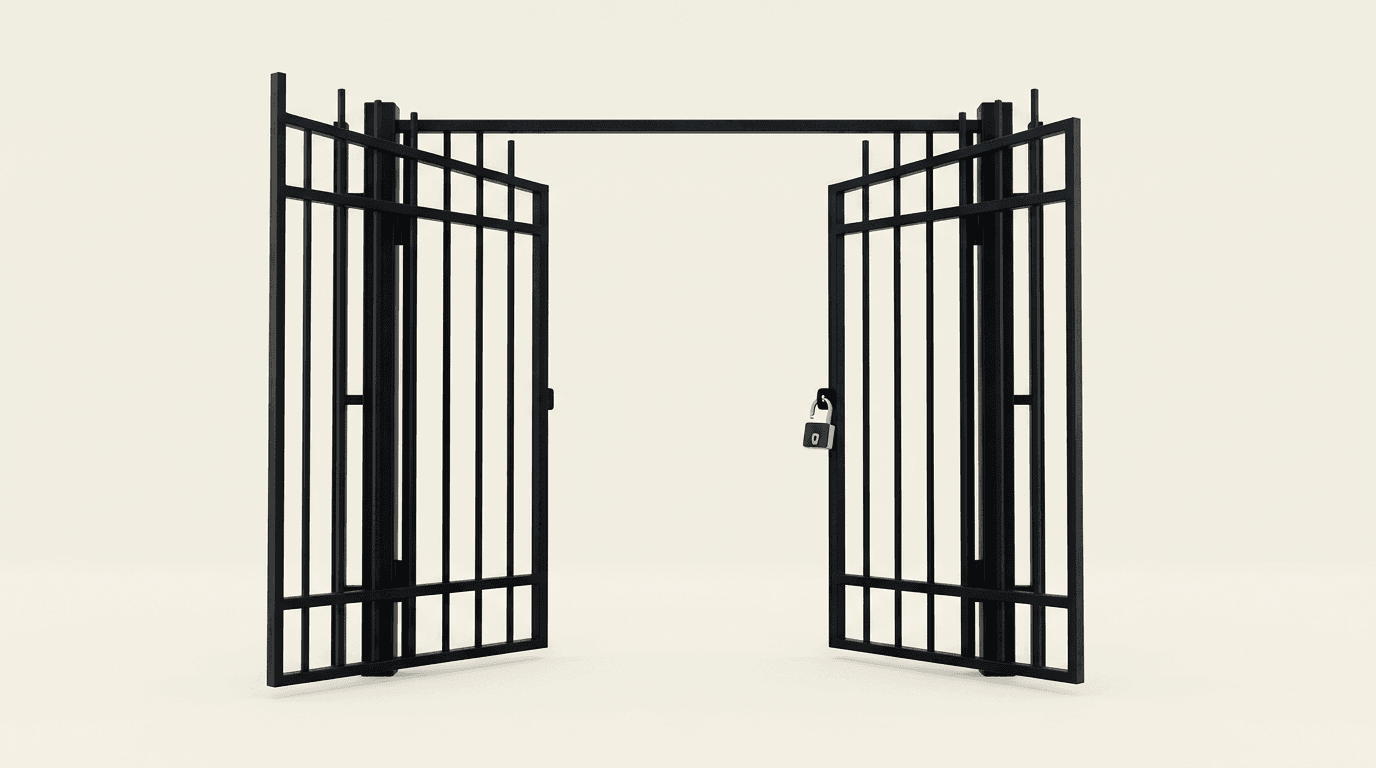
Picture a padlocked iron gate standing in the middle of an empty field with no wall on either side. There's a worn path leading up to it. That gate is the last decade of building things — and the field has been open the whole time.

One login for the whole business, software and a specialist in the same place — and why it costs what it costs.