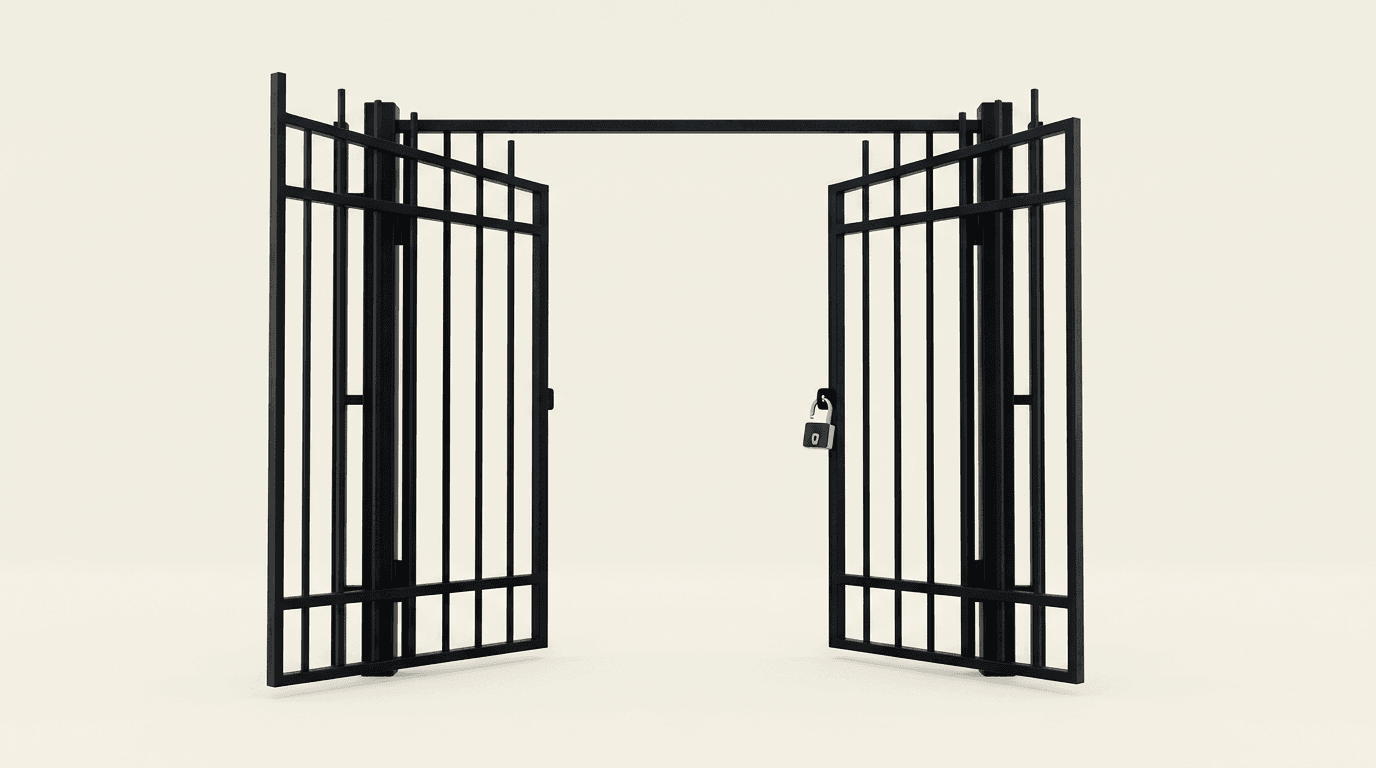
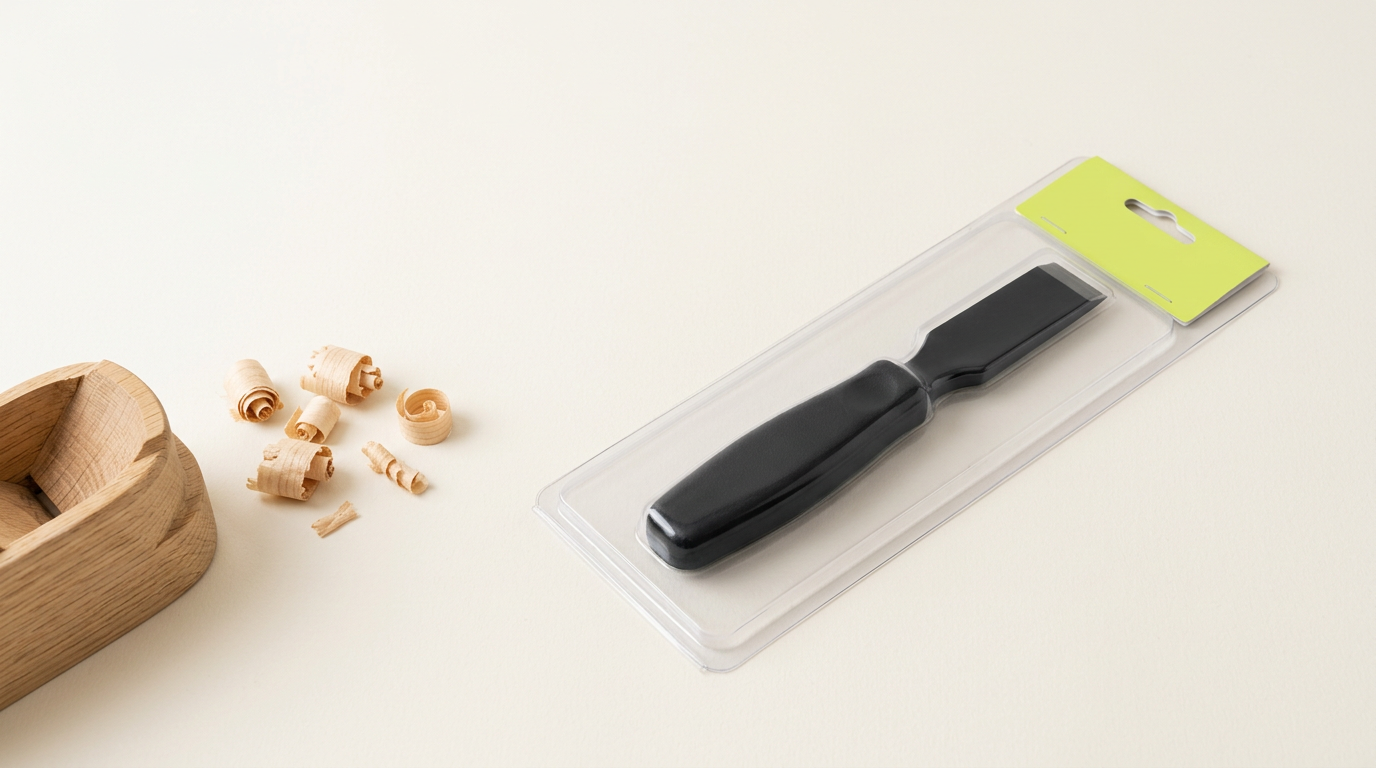
There's a workshop I think about a lot. Every tool in it is perfect. Chisels in ascending sizes, hung in order. Wrenches arranged by gauge. The bench is clean, the light falls where it should, the layout is thoughtful — somebody who knew what they were doing built that room, and built it for themselves.
And there's dust on everything. A thin, even film of it, resting on every handle and every jaw. Nobody has been in there for a long time.
That room is the last twenty years of business software. It's the most comfortable failure in the industry, because every individual purchase in it was defensible.
The story that sounded like progress
Somewhere along the way, the industry settled on a story that sounded like progress and turned out to be a bait and switch. Tell it fairly. It wasn't stupid when it was first told.
The story was this: work is expensive because it needs people. People are slow, expensive, inconsistent, and they take holidays. So replace the people with software. Buy the tool. Cancel the retainer. Do it yourself, on your own schedule, for a fraction of a salary.
It sounded good enough that a whole industry got built on it. Every category had its hero product, and every hero product made the same promise: you will not need to hire anyone for this.
And the tools genuinely work. That's what makes it such a good trap. The software does what it says. The chisels are sharp, the wrenches fit, the room is beautiful. Nobody in this story was sold a lie.
What the pitch left out
The pitch skipped one part, and it needs a name.
The ownership transfer is the moment a purchase turns a job that used to belong to somebody you paid into a job that belongs to you — unpaid, permanent, and invisible on any budget line. The tool didn't delete the task. It changed whose task it is.
- A founder who used to pay an agency to run ads now pays four subscriptions and spends Sunday inside an ads dashboard.
- A team that used to have an ops person now has seven tools and a shared spreadsheet called ops.
- A studio that used to hire a bookkeeper now has accounting software, a reconciliation habit, and a growing suspicion that something is being missed.
Why you can't see it when you buy
The ownership transfer is hard to spot because it's paid in a currency nobody measures. It isn't a line item, because there's no invoice. It shows up as attention, spread across a hundred small moments — the tab you check at breakfast, the export you redo because the numbers didn't match, the notification you've learned to ignore because it fires without meaning anything.
Nobody will send you this number, so work it out yourself.
What a retainer was actually buying
Be precise about this, because most people think they were paying for execution. They were mostly paying for something else.
A retainer bought you a person who was accountable for a result. Accountability has three parts, and no subscription can supply any of them.
- Noticing
Somebody whose attention was pointed at your business, whose job was partly to see what you would not see.
- Triage
When something broke, somebody deciding whether it mattered, and what to do first.
- The uncomfortable conversation
The part nobody misses until it's gone — the moment somebody has to tell you the thing you do not want to hear.
That last one is a big part of why tools feel easier. A tool will never tell you that you are wrong. But somebody has to.
So what replaces it
The answer isn't going back to retainers, and it isn't buying more tools. It's software with the service still attached — a person who owns the outcome and has the tools to execute, instead of a login that leaves the outcome sitting with you.
That's the shift in one line: you don't want the chisels. You want the room humming. You want somebody in there, using them, accountable for what comes out.
Everything is going to be built this way — tools with a person attached, or nothing at all. The only question is whether it happens to you or with you.
How do you find the dust in your own workshop?
Open your list of subscriptions and write a name beside each one. Not whoever pays for it. The person who answers for what it produces. Where you can't write a name, or the name is yours and you haven't logged in lately, you have found a dusty tool. The task it was bought for is still there, undone, or done by you at breakfast.
Before
A login
- It renews whether or not anyone opened it.
- When a number stops adding up, nothing tells you.
- Deciding what matters after something breaks is your job.
- It never says the thing you don't want to hear.
After
A login with a person attached
- Someone is inside the tool, using it for you.
- They notice the change before you do.
- They decide what to fix first, and tell you why.
- They tell you when you are wrong.
What are the real ways to get the thing done?
Is DoubleUp what replaces it?
We think so, on one condition. DoubleUp exists because our company owns the software and still found that somebody has to run it. So we put a person on it: an AI Marketer, Operator, Engineer or Creator who works in your business and answers for the result. Where the job has an end (an app built, a book published, a film released), our team does the whole thing as a service. The condition is that you let that person do what a retainer was really for: notice, triage, and tell you.
This is for you if
- You pay for tools nobody has opened lately, and the jobs behind them are still waiting.
- You spend Sunday inside a dashboard that was meant to save you a hire.
- You cancelled an agency and now miss having someone who noticed things.
It isn’t, if
- Your tools are in daily use and someone already owns what comes out of them. You've solved this.
- You want software only, with nobody looking over your numbers.
- You would want the specialist to agree with you. The useful ones won't always.
What you might still be thinking
Isn't this just a retainer with a new name?
Partly, and we would rather say so. The part of a retainer worth keeping was the accountable person. What changes is everything around them: one person on software their own company built, in place of a team of specialists each billing for a piece, and no separate stack for you to buy and wire together.
Won't AI agents run the tools themselves soon?
They already do much of the execution. But an agent can only flag a change. Deciding whether it matters to your business, and telling the owner something unwelcome, is judgment about your situation. Until software answers for outcomes, a person has to, and today that person is you.
I have staff, and the tools work fine. Why add anyone?
If one named person on your team already notices, triages and tells you, keep them and skip us. The test is whether working means the software runs or the job gets done. A tool's failure mode is silence, so a quiet dashboard proves nothing. Ask when those tools last told you something you didn't want to hear.
I cancelled an agency because I couldn't tell what I was paying for. Why is this different?
That complaint is about visibility, not about having a person. Ask of any arrangement, ours included: who does the work, how often do I hear from them, and what do I get to see? One specialist you talk to directly is easier to judge than a team behind an account manager.
Is a specialist worth it compared with the subscriptions I already pay for?
Compare like with like. A subscription's price leaves out the work it moved onto your desk. Add your own hours at what they are worth, using the calculator earlier on this page, and then compare. If tools plus your time still come out lower and the work is getting done, keep doing it yourself.
What does it cost, and what happens to the work if I stop?
This essay argues a point and sets out no fee for a specialist, so we won't slip one in. You'll find the fee and the way out in What Is DoubleUp? and in the hiring guides. The work is simpler: what was built is yours. If you stop, you have two choices: keep it running on SuperCool, which is $97 a month for hosting plus credits, or download everything and set it up again yourself on whatever you want to use. Check all of it against your subscription list before you book anything.
The workshop was never the problem. It needs somebody in it. What the software is, and what a specialist on it costs, are in our guide to SuperCool, and What Is DoubleUp?